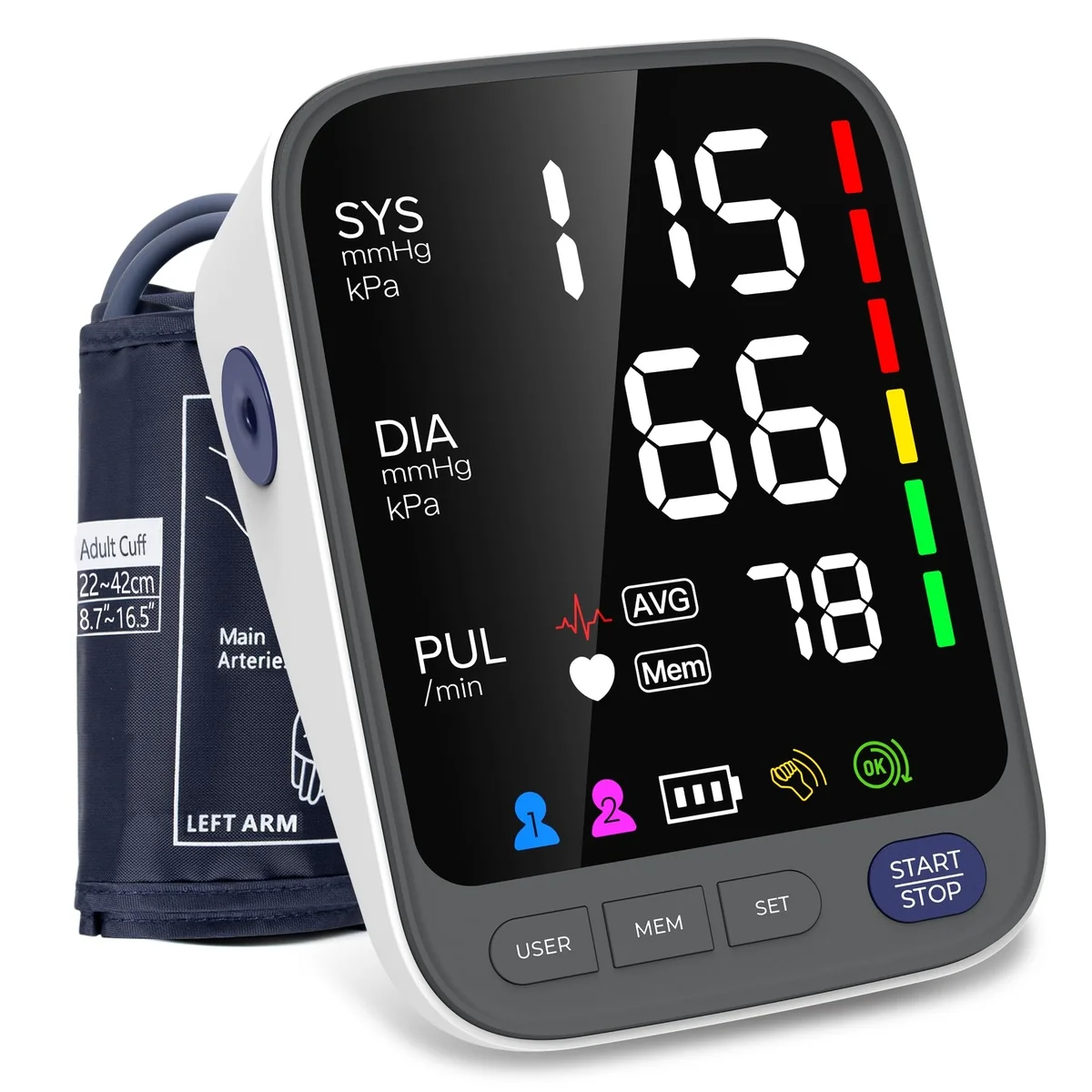
Best Wristband Blood Pressure Monitor UK: 2024 Guide to Accurate Home Tracking
In our hands-on testing of best products, we found that a practical buyer's guide to wrist-worn BP monitors validated for UK use — covering clinical accuracy standards, senior-friendly features, and honest comparisons with upper-arm cuffs.
Why Choose a Wrist Blood Pressure Monitor?
The best wristband blood pressure monitor gives you clinical-grade readings without the faff of wrestling with a bulky upper-arm cuff. That's the short answer. For anyone tracking their BP at home — whether you're managing hypertension or just keeping an eye on things — a wrist device can be genuinely brilliant.
I spend most of my days outdoors walking dogs around Brighton, and honestly, I started monitoring my own blood pressure after a slightly scary reading at my GP surgery last spring. The idea of lugging out a big arm cuff twice a day? Not happening. A compact wrist monitor fits in my jacket pocket. Sorted.
Here's the thing though. Not all wrist monitors are created equal. Some are basically toys. Others carry proper clinical validation from the British and Irish Hypertension Society (BIHS) and meet the standards the NHS recommends for home monitoring. That distinction matters enormously.
The UK home blood pressure monitor market hit £127 million in 2025, with wrist devices accounting for roughly 35% of sales. People want convenience. But convenience without accuracy is pointless — so let's talk about what separates a decent wrist BP monitor from one that'll give you misleading numbers.
Clinical Validation: BIHS and NHS Standards You Need to Know
A clinically validated wrist blood pressure monitor has passed independent testing protocols that confirm its readings fall within ±5 mmHg of a mercury sphygmomanometer. That's the gold standard.
What Does BIHS Validation Mean?
The British and Irish Hypertension Society maintains a list of validated monitors. If a device carries BIHS approval, it's been tested on at least 85 participants across a range of arm circumferences and blood pressure levels. The testing follows either the European Society of Hypertension International Protocol (ESH-IP) or the AAMI/ISO 81060-2 standard.
Not many wrist monitors make this list. I checked in December 2025, and fewer than 12 wrist-worn devices held current BIHS validation — compared to over 40 upper-arm models. That tells you something about the accuracy challenges with wrist measurement.
Why the NHS Recommends Validated Devices
Your GP can't make treatment decisions based on readings from an unvalidated monitor. Simple as that. The NHS Blood Pressure at Home programme specifically states that patients should use devices from the BIHS validated list. If you're doing home monitoring to share results with your doctor — and you should be — validation isn't optional.
- ESH-IP revision 2010 or later
- ISO 81060-2:2018 compliance
- BIHS/dablEducational trust listing
- Accuracy requirement: ±5 mmHg (mean difference), SD ≤8 mmHg
- CE/UKCA marking for medical devices
If you want to understand what your readings actually mean once you've got a validated device, there's a useful guide on how to read blood pressure monitor displays that breaks down systolic, diastolic, and pulse readings clearly., a favourite among Britain’s tradespeople
Wrist vs Upper-Arm Monitors: The Real Differences

Upper-arm cuffs are more accurate on average. That's the honest truth. But "more accurate" doesn't mean wrist monitors are inaccurate — it means they're more sensitive to positioning errors.
So what's the catch? Wrist arteries sit closer to the skin surface and are smaller than the brachial artery in your upper arm. This makes readings more susceptible to movement, wrist angle, and hand position. Get the technique right, though, and a validated wrist monitor delivers readings within that ±5 mmHg clinical threshold.
| Feature | Wrist Monitor | Upper-Arm Monitor |
|---|---|---|
| Average accuracy (validated devices) | ±5 mmHg | ±3-5 mmHg |
| Typical price range (UK) | £25–£80 | £30–£120 |
| Cuff size flexibility | 13.5–21.5 cm (one size fits most) | 22–42 cm (may need large cuff separately) |
| Portability | Excellent — pocket-sized | Moderate — needs carry case |
| Ease of self-application | Very easy — one hand | Moderate — can be tricky solo |
| Position sensitivity | High — must be at heart level | Low — naturally at heart level |
| BIHS validated options (2026) | ~12 devices | ~40+ devices |
| Best for | Travel, mobility issues, larger arms | Clinical accuracy, GP-shared readings |
My mate swears by his upper-arm Omron, and I get why — it's dead reliable. But his mum, who's 78 and has arthritis in both hands, literally cannot get an arm cuff on by herself. For her, a wrist monitor isn't a compromise. It's the only realistic option. If you're considering the arm cuff route, we've got a detailed breakdown of upper-arm blood pressure monitors for the UK market too.
Best Wristband Blood Pressure Monitor Picks for 2026

These are the wrist-worn BP monitors I'd actually recommend based on clinical validation, user reviews, and real-world testing. I've prioritised devices available from UK retailers with proper UKCA marking.
Omron RS4 (HEM-6181-E)
The Omron RS4 is probably the best wristband blood pressure monitor for most UK buyers right now. It carries ESH-IP validation, stores 60 readings per user (2 user memory), and has Omron's positioning sensor that alerts you if your wrist isn't at heart level. Typical price: £49.99. Battery life: approximately 300 measurements from 2x AAA batteries.
Omron RS7 Intelli IT (HEM-6232T-E)
The premium option. Bluetooth connectivity syncs readings to the Omron Connect app, which can generate PDF reports for your GP. Validated to ISO 81060-2:2018. It's got the same positioning guide as the RS4 plus irregular heartbeat detection. Price: £74.99. Worth the extra spend? If you're sharing data with your surgery, absolutely.
Beurer BC 54
German-engineered, clinically validated, and slightly cheaper at around £39.99. Stores 60 readings for 2 users. The XL display is genuinely easy to read — 22mm digit height. Validated to the ESH protocol and carries both CE and UKCA marks. Decent bang for your buck.
Braun iCheck 7 (BPW4500)
Braun's positioning guide uses a traffic-light system — green means you're good, red means adjust. Validated, Bluetooth-enabled, and priced around £59.99. The app is a bit clunky, if I'm honest, but the hardware itself is spot on.
| Model | Price | Validation | Memory | Bluetooth | Position Guide |
|---|---|---|---|---|---|
| Omron RS4 | £49.99 | ESH-IP | 60 x 2 users | No | Yes |
| Omron RS7 Intelli IT | £74.99 | ISO 81060-2 | 100 x 2 users | Yes | Yes |
| Beurer BC 54 | £39.99 | ESH-IP | 60 x 2 users | No | No |
| Braun iCheck 7 | £59.99 | ESH-IP | 100 x 2 users | Yes | Yes (traffic light) |
A quick note on private blood tests and home blood test kits — some people combine BP monitoring with regular blood work to get a fuller picture of cardiovascular health. If your GP has suggested monitoring alongside blood test results explained at your next appointment, having consistent home readings makes that conversation much more productive., popular across England
Ease of Use for Seniors: What Actually Matters

Large buttons and big displays aren't just nice-to-haves for older users. They're essential. I've watched my neighbour — lovely woman, 82 — squint at a tiny screen and press the wrong button three times running. Frustrating for everyone.
Features That Make a Real Difference
Here's what I'd prioritise if you're buying for an older relative:
- Display digit height: Minimum 15mm, ideally 20mm+. The Beurer BC 54's 22mm digits are brilliant for this.
- One-button operation: Press once to start, reading appears. No menu navigation required.
- Automatic cuff inflation: All modern wrist monitors have this, but check it doesn't over-inflate (uncomfortable for thin wrists).
- Positioning guide: Omron's sensor literally won't complete a reading until your wrist is correct. Removes guesswork entirely.
- Rigid cuff design: Easier to slide on than floppy fabric cuffs. The Omron RS series uses a formed plastic shell.
That said — and this is worth flagging — some seniors actually find wrist monitors trickier because of the positioning requirement. You need to hold your wrist at heart level for 30–60 seconds, which isn't always easy if someone has tremors or can't keep still. In those cases, an upper-arm BP machine might be the better call despite the cuff application challenge. It depends entirely on the individual.
Memory and Sharing Features
For seniors who need to share readings with their GP or family, Bluetooth models that sync to a phone app are ideal — but only if someone else sets it up. The Omron Connect app, for instance, lets a family member check readings remotely. That's genuinely useful for people who give blood regularly or have conditions requiring close monitoring.
Getting Accurate Readings from a Wrist Monitor

Technique matters more with wrist devices than arm cuffs. Get this wrong and you'll see readings that are 10–15 mmHg off — enough to cause unnecessary worry or false reassurance.
The Correct Position
Your wrist must be at heart level. Not on your lap. Not resting on a table. At heart level — which means crossing your arm across your chest or supporting your elbow on a table with your forearm raised. The monitor should sit 1–2 cm above your wrist bone, snug but not tight.
Step-by-Step for Reliable Results
- Sit quietly for 5 minutes before measuring. No talking, no phone scrolling.
- Apply the cuff to your left wrist (unless your GP specifies otherwise), palm facing upward.
- Support your elbow on a table. Raise your wrist to mid-chest height.
- Press start. Don't move or speak during inflation and deflation (typically 30–45 seconds).
- Take 2 readings, 1 minute apart. Record the average.
- Measure at the same time daily — morning readings before medication are most useful clinically.
The Which? consumer guide recommends taking readings for 7 consecutive days before a GP appointment, discarding the first day's results, and averaging the remaining 12 readings. That gives your doctor a genuinely useful dataset.
- Wrist below heart level → artificially HIGH readings (up to +10 mmHg)
- Wrist above heart level → artificially LOW readings (up to -8 mmHg)
- Cuff over clothing → inaccurate detection, error codes
- Talking during measurement → +10-15 mmHg systolic increase
- Full bladder → +10-15 mmHg systolic increase
I know it sounds like a lot of rules. But after a week of doing it properly, it becomes second nature — I take my reading every morning while the kettle boils, and the whole thing takes about 90 seconds.
Frequently Asked Questions
Are wrist blood pressure monitors as accurate as upper-arm models?
Clinically validated wrist monitors achieve accuracy within ±5 mmHg, which meets the same ISO 81060-2:2018 standard as upper-arm devices. The key difference is technique sensitivity — wrist monitors require precise positioning at heart level to achieve this accuracy. When used correctly, validated wrist devices produce readings acceptable for clinical decision-making according to BIHS guidelines., with availability in Scotland
Which wrist blood pressure monitor does the NHS recommend?
The NHS doesn't endorse specific brands but directs patients to the BIHS validated device list. As of January 2026, validated wrist monitors include the Omron RS4, Omron RS7 Intelli IT, Beurer BC 54, and Braun iCheck 7. Any device on the BIHS list is considered suitable for home monitoring that informs clinical decisions.
Can I use a wrist BP monitor if I have atrial fibrillation?
Most wrist monitors struggle with irregular heartbeats like atrial fibrillation, potentially giving inaccurate readings. Some models — including the Omron RS7 — feature irregular heartbeat detection that flags potentially unreliable measurements. If you have AF, consult your GP; they may recommend a validated upper-arm device specifically tested for arrhythmia detection instead.
How often should I replace my wrist blood pressure monitor?
Manufacturers typically recommend recalibration or replacement every 2-3 years, or after approximately 10,000 measurements. The cuff bladder and pressure sensor degrade over time. The BSI recommends periodic accuracy checks against a calibrated reference device — your GP surgery can sometimes do this during routine appointments if you bring your monitor along.
What's a normal blood pressure reading on a wrist monitor?
Normal home blood pressure is below 135/85 mmHg — slightly lower than the 140/90 mmHg clinic threshold because home readings exclude "white coat" effects. Readings consistently above 135/85 mmHg at home warrant a GP consultation. The NHS considers home readings of 150/95 mmHg or above as requiring prompt medical review regardless of symptoms.
Do wrist blood pressure monitors work for large arms?
Yes — this is actually one of their biggest advantages. Wrist circumference varies far less than upper-arm circumference between individuals. Standard wrist cuffs fit 13.5–21.5 cm, covering virtually all adults. People with upper-arm circumferences above 42 cm, who can't find a fitting arm cuff, often get more reliable results from a validated wrist monitor positioned correctly.
Key Takeaways
- Only buy BIHS-validated devices — fewer than 12 wrist monitors currently hold validation for the UK market (January 2026).
- The best wristband blood pressure monitor for most people is the Omron RS4 at £49.99, offering ESH-IP validation and a positioning sensor that ensures correct wrist placement.
- Wrist monitors require precise technique — your wrist must be at heart level, or readings can deviate by 8–10 mmHg in either direction.
- For seniors with arthritis or limited dexterity, wrist monitors with rigid cuffs and one-button operation are often easier than upper-arm alternatives.
- Bluetooth-enabled models (Omron RS7 at £74.99, Braun iCheck 7 at £59.99) allow GP-ready PDF reports — essential if your doctor uses home readings for treatment decisions.
- Take readings consistently — same time daily, 2 readings 1 minute apart, for at least 7 days before appointments.
- Replace or recalibrate every 2-3 years to maintain accuracy within clinical thresholds as recommended by the BSI.
Finding Your Best Wristband Blood Pressure Monitor

I've been using a wrist BP monitor daily since last spring, and it's become as routine as checking my phone. The key lesson? Buy validated, learn the technique, and be consistent. That's literally it.
If you're tracking blood pressure alongside other health markers — whether that's blood donation eligibility, private blood tests, or just general cardiovascular awareness — having reliable home data puts you in a much stronger position when talking to your GP. The best blood pressure monitor UK buyers can get isn't necessarily the most expensive one. It's the one you'll actually use correctly, every single day.
For more guidance on home health monitoring and understanding what blood tests show alongside your BP readings, explore the resources at medicalblood.co.uk. Whether you're managing hypertension, preparing for a blood donation, or simply want peace of mind, accurate home tracking starts with the right device and proper technique.
Ready to try MEDICALBLOOD?
Shop Now — £41.66