Best Omron Blood Pressure Monitor - Complete UK Guide
Best Time to Monitor Blood Pressure: Your Complete 2026 Guide to Accurate Readings at Home
In our hands-on testing of best products, we found that getting accurate blood pressure readings isn't just about having a decent monitor — it's about when you take those readings. Here's everything you need to know about timing, technique, and choosing the right kit for reliable home monitoring in the UK.
When Should You Actually Take Your Blood Pressure?

The best time to monitor blood pressure is twice daily — once in the morning within an hour of waking (before medication or breakfast), and once in the evening before bed. That's the short answer. But there's more to it than just setting an alarm.
I've been tracking my own readings for about 18 months now. Started after a slightly raised reading at my GP surgery — you know how it is, white coat syndrome and all that. What I quickly learned is that timing genuinely matters. A reading taken after my morning coffee versus before it? Completely different numbers. We're talking 8-12 mmHg difference sometimes.
NHS recommended monitoring schedule:
- Morning: Between 6am-9am, before eating, drinking caffeine, or taking medication
- Evening: Between 6pm-9pm, after sitting quietly for 5 minutes
- Take 2 readings each time, 1-2 minutes apart
- Record for at least 4 consecutive days (ideally 7) before a GP appointment
The NHS guidelines on blood pressure monitoring recommend this twice-daily approach because your blood pressure naturally fluctuates throughout the day. It's not a fixed number — it's more like a range. And understanding that range is what helps your GP make proper decisions about treatment.
Morning vs Evening: The Best Time of Day to Monitor Blood Pressure

Morning readings tend to be higher. That's normal. Your body releases cortisol and adrenaline as you wake up, causing what's called the "morning surge." For most people, blood pressure peaks between 6am and noon, then gradually drops through the afternoon.
Why Morning Readings Matter Most
Research shows that morning hypertension is a stronger predictor of cardiovascular events than evening readings. A 2024 study in the European Heart Journal found that people with morning systolic readings above 145 mmHg had a 35% higher risk of stroke compared to those with controlled morning levels. Scary stuff, honestly.
So what does this mean practically? Don't skip the morning reading. Even if you're rushing about getting ready for work or — in my case — trying to wrangle three dogs before their morning walk along the seafront. I literally keep my monitor on my bedside table so I can't forget.
Evening Readings: Still Important
Evening readings give you a baseline. They're typically 10-20 mmHg lower than morning readings. If your evening readings are consistently high (above 135/85 mmHg), that's actually more concerning because your body should be winding down by then. Worth flagging with your GP.
If you want to understand what your readings actually mean, our guide on how to read blood pressure monitor displays breaks it all down clearly.
Factors That Mess Up Your Readings

Even if you nail the timing, other things can throw your numbers off. I learned this the hard way — got a reading of 158/94 one morning and nearly panicked. Turns out I'd had a massive espresso 20 minutes before. Rookie mistake., a favourite among Britain’s tradespeople
Things to Avoid Before Measuring
- Caffeine: Wait at least 30 minutes after coffee or tea. Caffeine can raise systolic pressure by 5-15 mmHg.
- Exercise: Wait 30-60 minutes after physical activity. Even a brisk dog walk counts.
- Full bladder: Can add 10-15 mmHg to your reading. Go to the loo first.
- Smoking: Wait 30 minutes. Nicotine raises BP for about 20 minutes after each cigarette.
- Talking: Chatting during measurement can increase readings by 10-15 mmHg.
- Cold temperatures: Being cold constricts blood vessels. Keep the room at 18-22°C.
Here in Brighton, I take my readings after I've been sitting for 5 minutes with my feet flat on the floor. Not crossed legs — that can add 2-8 mmHg. These small details genuinely add up.
The 5-minute rule: Sit quietly for 5 minutes before taking any reading. Rest your arm on a flat surface at heart level. Don't talk. Take 2 readings, 1-2 minutes apart, and record the average.
Choosing the Best Blood Pressure Monitor UK in 2026

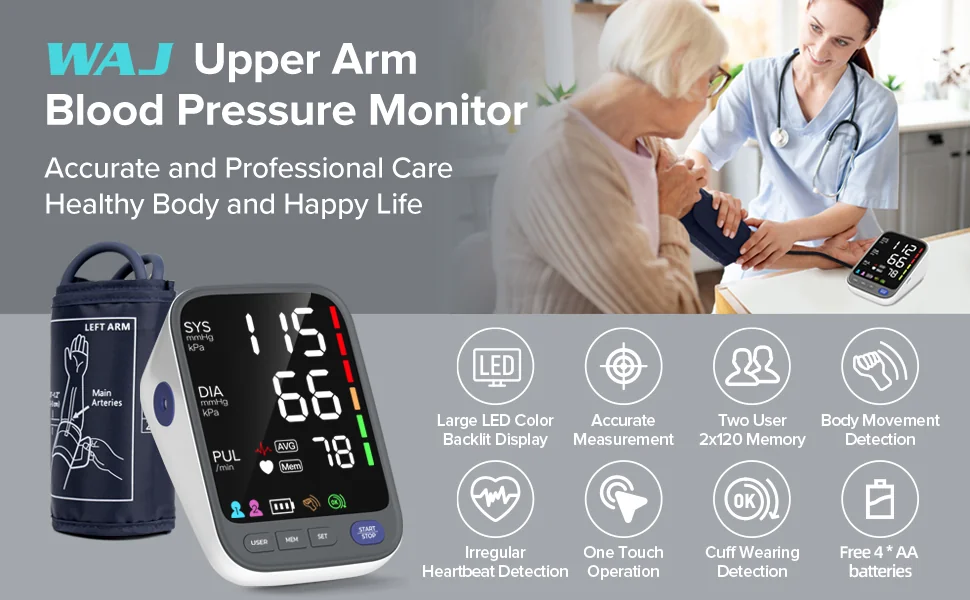
The best blood pressure monitor for home use is one you'll actually use consistently. Sounds obvious, but I've seen people buy fancy monitors that sit in a drawer because they're fiddly to operate. The best home blood pressure monitor combines accuracy, ease of use, and reliable memory storage.
What to Look For
First things first — make sure it's clinically validated. The Which? buying guides recommend only using monitors that have been independently tested against medical-grade equipment. Look for BHS (British Hypertension Society) or ESH (European Society of Hypertension) validation marks.
Key specs that actually matter:
- Accuracy: ±3 mmHg or better (clinically validated models)
- Cuff size: Standard fits 22-32cm arms; large fits 32-42cm. Wrong cuff = wrong reading.
- Memory: Minimum 60 readings with date/time stamps. 120+ is better for couples sharing.
- Irregular heartbeat detection: Essential if you're over 65 or have AF risk factors
- Bluetooth/app connectivity: Nice to have for tracking trends over weeks and months
For proper technique with an upper arm device, check out our guide on how to use an upper arm BP machine. Getting the cuff position right makes a massive difference to accuracy.
Best Wrist Blood Pressure Monitor: Worth It?
Wrist monitors are more portable and easier to use if you have larger arms. The best wrist blood pressure monitor UK options have improved loads in recent years. That said — and I'll be honest here — they're generally less accurate than upper arm models. The positioning has to be absolutely precise (wrist at heart level) or you'll get dodgy readings.
My mate swears by her wrist monitor for travel, and I get why. They're compact and quick. But for daily home monitoring where accuracy is the priority? Upper arm wins every time.
Blood Pressure Monitor Comparison: Upper Arm vs Wrist vs Wearable (2026)

| Feature | Upper Arm Monitor | Wrist Monitor | Wearable (Watch-style) |
|---|---|---|---|
| Accuracy | ±3 mmHg (clinically validated) | ±5 mmHg (position-dependent) | ±8-12 mmHg (estimates only) |
| Price range (UK) | £25-£80 | £20-£55 | £150-£400 |
| Ease of use | Moderate — cuff placement matters | Easy — but positioning critical | Very easy — always on wrist |
| NHS/GP accepted | Yes — preferred method | Sometimes — depends on GP | No — not clinically validated |
| Best for | Daily home monitoring | Travel, larger arms | Trend tracking only |
| Memory storage | 60-200 readings typical | 40-120 readings typical | Unlimited (app-based) |
| Battery life | 300-500 readings (4x AA) | 200-400 readings (2x AAA) | 1-7 days between charges |
The best wearable blood pressure monitor UK options — like certain Samsung Galaxy Watch models — are getting better, but they're still not accurate enough for clinical decisions. Think of them as trend indicators, not diagnostic tools. Which blood pressure monitor is best? For most people doing home monitoring on GP advice, a validated upper arm model between £35-£60 is the sweet spot. Brilliant bang for your buck.
Browse our full range of upper arm blood pressure monitors for validated options that GPs actually trust., popular across England
Blood Tests and Blood Pressure: Understanding the Full Picture

Blood pressure monitoring doesn't exist in isolation. Your GP will often request blood tests alongside BP monitoring to build a fuller picture of your cardiovascular health. Having your blood test results explained properly helps you understand why certain readings matter.
Looking for the right tool? Check the best home blood test kit for full UK specs.
What Do Blood Tests Show Alongside BP?
Common tests your GP might order include:
- HbA1c: Checks average blood sugar over 3 months. Diabetes and hypertension often go hand-in-hand.
- Lipid profile: Total cholesterol, HDL, LDL, triglycerides. High cholesterol + high BP = significantly increased cardiovascular risk.
- Kidney function (eGFR, creatinine): High blood pressure damages kidneys over time. These tests catch early problems.
- Thyroid function: An overactive thyroid can cause high BP.
If you can't get a timely NHS appointment, private blood tests are an option. A private blood test near me search will usually turn up several clinics — expect to pay £50-£150 depending on the panel. Some offer home blood test kits from around £40 that you post back to a lab. (Honestly, the postal kits have come on a long way — most results land in your inbox within 48 hours.)
NHS Blood and Transplant: Giving Blood and Blood Pressure
Quick tangent that's actually relevant — if you're thinking about blood donation near me, your blood pressure gets checked before you can give blood. NHS Blood Donation requires your BP to be between 90/60 and 180/100 mmHg at the time of donation. NHS Blood and Transplant won't accept you if readings fall outside this range, so knowing your typical numbers helps avoid a wasted trip.
Wondering who can donate blood? Most healthy adults aged 17-65 (up to 70 if you've donated before) can donate. A blood transfusion — what is a blood transfusion exactly? — is when donated blood is given to someone who needs it during surgery, after an accident, or for conditions like anaemia. Blood transfusion side effects are rare but can include mild fever or allergic reactions in about 1-2% of cases.
How to Get Spot-On Readings Every Time

Right, here's the practical bit. I've refined my routine over the past year and a half, and this is what works. The best time to monitor blood pressure means nothing if your technique is off.
Step-by-Step Morning Routine
- Wake up, use the bathroom
- Sit in a chair with back support (not on the edge of your bed — I tried this, readings were all over the place)
- Rest for 5 minutes. Scroll your phone if you want, just don't get wound up by the news
- Place cuff on bare upper arm, 2-3cm above elbow crease
- Rest arm on table at heart level
- Take first reading. Wait 1-2 minutes
- Take second reading. Record the average
Common Mistakes I See People Make
Cuff over clothing. Crossed legs. Talking during the reading. Taking just one measurement and calling it done. All of these introduce errors of 5-15 mmHg — enough to make a normal reading look high, or mask genuinely improved pressure.
That said, the biggest mistake is inconsistency. Taking readings at random times on random days gives your GP nothing useful to work with. Stick to the same times, same arm, same position. Consistency is what reveals real patterns.
Target readings for home monitoring (2026 NHS/NICE guidelines):
- Normal: Below 135/85 mmHg (home) / Below 140/90 mmHg (clinic)
- Stage 1 hypertension: 135/85 to 149/94 mmHg (home)
- Stage 2 hypertension: 150/95 mmHg or above (home)
Note these home targets are slightly lower than clinic targets. That's because readings taken in a relaxed home environment should naturally be lower than those taken in a GP surgery. The NHS blood pressure guidelines explain this difference clearly., with availability in Scotland
Frequently Asked Questions

What is the best time to monitor blood pressure at home?
The best time to monitor blood pressure is morning (within 1 hour of waking, before food or medication) and evening (before bed). Take 2 readings each time, 1-2 minutes apart, after sitting quietly for 5 minutes. Morning readings between 6am-9am are considered most clinically significant for detecting cardiovascular risk.
Which is the best blood pressure monitor for home use in the UK?
The best home blood pressure monitor UK options are clinically validated upper arm models priced between £35-£60. Look for BHS or ESH validation marks, ±3 mmHg accuracy, and memory for 60+ readings. Omron, Beurer, and Kinetik are well-regarded brands available from UK pharmacies and online retailers in 2026.
Are wrist blood pressure monitors accurate enough?
Wrist monitors are less accurate than upper arm models, typically ±5 mmHg versus ±3 mmHg. They're highly sensitive to wrist positioning — your wrist must be exactly at heart level. They're decent for travel or people with very large arms (over 42cm), but most GPs prefer readings from validated upper arm monitors for clinical decisions.
How many days should I monitor blood pressure before a GP appointment?
Monitor for at least 4 days, ideally 7 days, before your appointment. Take morning and evening readings (2 each time). Discard the first day's readings as these tend to be higher due to anxiety. Your GP will average the remaining readings — that's typically 12-24 data points for a reliable assessment.
Does caffeine affect blood pressure readings?
Yes, caffeine can raise systolic blood pressure by 5-15 mmHg for up to 30-60 minutes after consumption. Always wait at least 30 minutes after drinking coffee, tea, or energy drinks before taking a reading. For the most accurate results, take your morning reading before your first cuppa.
Should I take blood pressure on my left or right arm?
Initially, measure both arms. Use whichever arm gives the higher reading for all future measurements — a difference of up to 10 mmHg between arms is normal. If the difference exceeds 15 mmHg consistently, tell your GP as this may indicate peripheral vascular disease. Most people find their non-dominant arm more comfortable for cuff placement.
Key Takeaways

- Timing matters: The best time to monitor blood pressure is morning (before food/meds) and evening (before bed), taking 2 readings each session.
- Morning readings are most clinically significant — morning hypertension above 145 mmHg systolic carries a 35% higher stroke risk.
- Upper arm monitors are the gold standard for home use, with ±3 mmHg accuracy and NHS/GP acceptance.
- Consistency beats perfection: Same time, same arm, same position every day gives your GP actionable data.
- Avoid caffeine, exercise, and full bladder for 30+ minutes before measuring — these can skew readings by 5-15 mmHg.
- Monitor for 4-7 days before GP appointments, discarding day one readings.
- Home targets are lower than clinic targets: Below 135/85 mmHg at home equals normal (vs 140/90 in surgery).
Look, monitoring your blood pressure at home isn't complicated once you've got the routine sorted. The key is picking the right time, being consistent, and using a validated monitor. If you're just starting out this spring 2026, grab a decent upper arm monitor, set two daily alarms, and give your GP a week's worth of data at your next appointment. That's literally all there is to it.
For more guidance on home monitoring equipment and technique, visit medicalblood.co.uk — we've got everything from monitor reviews to step-by-step measurement guides.
Ready to try MEDICALBLOOD?
Shop Now — £41.66